

Beta Pharmacon Produces Globally Standardized MMS
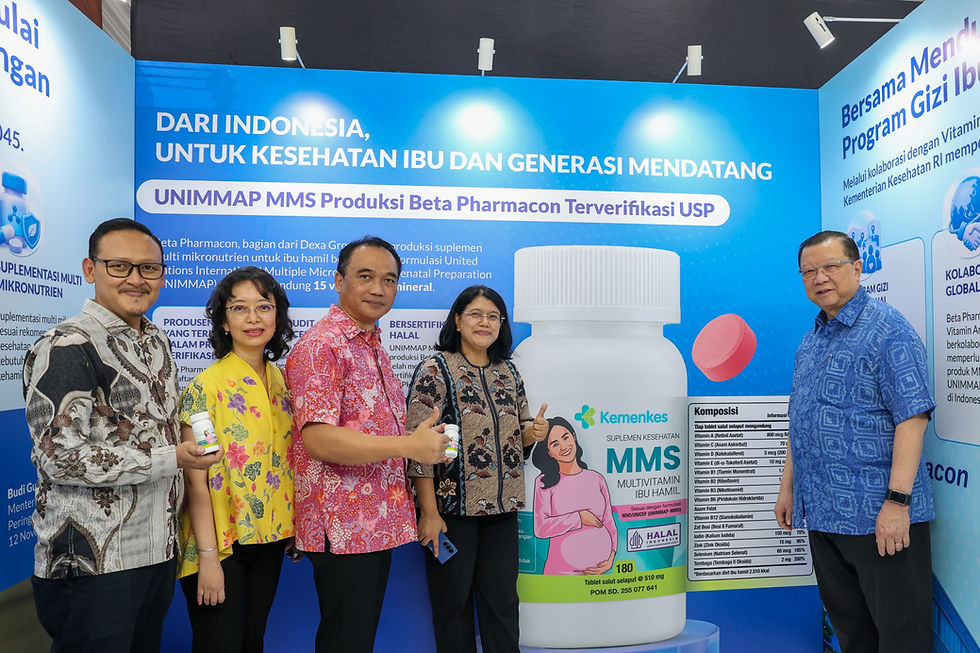
PT Beta Pharmacon, part of Dexa Group, is contributing to the independence of the national pharmaceutical industry by manufacturing Multi Micronutrient Supplements (MMS) formulated in accordance with the United Nations International Multiple Micronutrient Antenatal Preparation (UNIMMAP) standard in Indonesia. By meeting international quality standards, this product supports the government’s efforts to expand access to micronutrient supplementation for pregnant women while creating opportunities for Indonesia to be a supplier to the global market.
Manufactured at Beta Pharmacon’s production facility in Karawang, West Java, this UNIMMAP-formulated MMS contains 10 vitamins and 5 minerals to help pregnant women meet their micronutrient needs during pregnancy.
The launch of domestic MMS production took place as part of the 62nd National Health Day (Hari Kesehatan Nasional/HKN) celebration, themed “Healthy for All”, at Balai Kartini, Jakarta, on Sunday (15/11/2026). This initiative is also part of the government’s effort to strengthen Indonesia’s domestic healthcare product manufacturing capacity as a foundation for national health resilience.
In his opening remarks, Budi Gunadi Sadikin, Indonesia’s Minister of Health, emphasized the importance of prioritizing domestic production of healthcare products with high and sustained demand.
“We need to prioritize healthcare products that are widely used by the public and ensure that they can be manufactured domestically. This way, economic activity, contributions to GDP, and job creation can happen in Indonesia. MMS is one of those products with high and sustained demand. Rather than continuing to rely on imports, we need to push for domestic production,” said Budi Gunadi Sadikin.
Budi Gunadi Sadikin explained that Indonesia’s MMS demand reaches around 4.8 million pregnant women annually. With a consumption rate of 1 tablet each day for at least 6 months, or around 180 tablets for each woman, the national demand is estimated to reach around 864 million tablets per year.
The Minister of Health also expressed his appreciation for the eight pharmaceutical companies with established MMS production capacity in Indonesia. He noted that the demand is not limited by Indonesia’s domestic needs. With approximately 200 million pregnancies worldwide per year, the global MMS demand could reach 36 billion tablets annually.
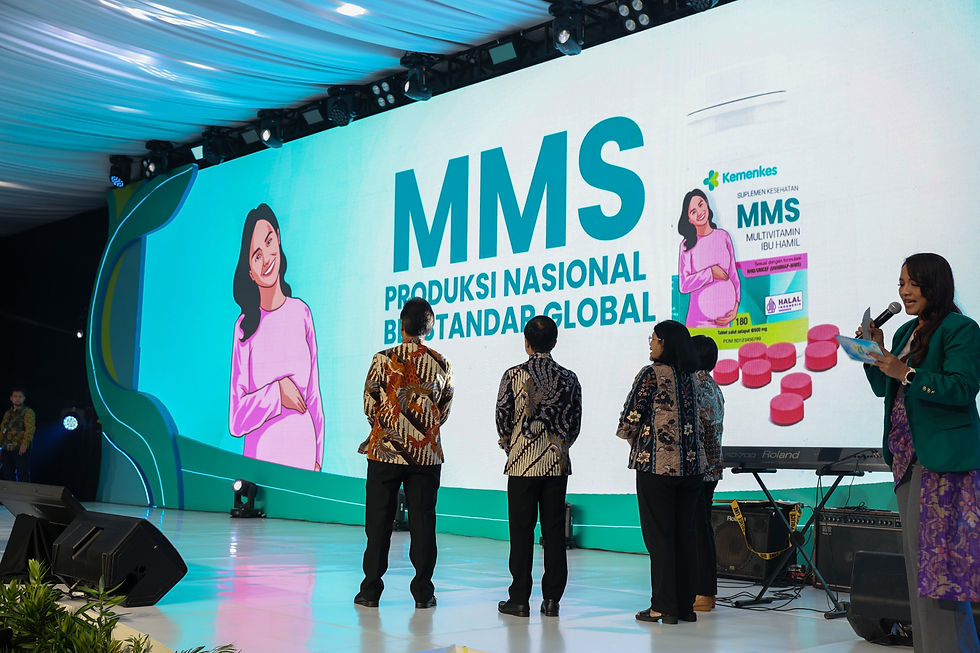
Beta Pharmacon’s Production Meets Global Quality Standards
Beta Pharmacon’s MMS is manufactured using the UNIMMAP formula, which consists of 15 different kinds of vitamins and minerals. This formulation provides more comprehensive micronutrient supplementation compared to the conventional iron and folic supplements.
To ensure product quality, Beta Pharmacon has been registered as a manufacturer under the United States Pharmacopeia (USP) UNIMMAP MMS Verification Program. Its manufacturing facility has also undergone a UNICEF audit based on global manufacturing and quality requirements for UNIMMAP MMS. In addition, this product has received halal certification from Indonesia’s Halal Product Assurance Agency (BPJPH) and is manufactured in compliance with Good Manufacturing Practices (GMP) standards.
PT Beta Pharmacon Director, Gatot Prayitno, stated that the production of UNIMMAP-formulated MMS demonstrates Beta Pharmacon’s manufacturing readiness and capabilities in producing healthcare products that meet international quality standards.
“The production of UNIMMAP-formulated MMS is part of Beta Pharmacon’s commitment to provide high-quality healthcare products through manufacturing processes that meet international standards. We ensure the readiness of our production facilities, the implementation of quality control systems, and operational consistency at every stage of production. With these capabilities, we hope to support a sustainable supply of MMS to meet national demand while also creating opportunities to serve the global market,” said Gatot Prayitno.
Supporting the National Maternal Nutrition Program
The availability of domestically manufactured MMS also supports the Ministry of Health’s multi-micronutrient supplementation program for pregnant women. The program is a collaboration between the Directorate General of Pharmaceuticals and Medical Devices and the Directorate General of Primary and Community Health, aimed at supporting stunting reduction and improving mother and child health starting during pregnancy.
Director General of Pharmaceuticals and Medical Devices at the Ministry of Health of the Republic of Indonesia, Lucia Rizka Andalusia, explained that the program's implementation began in 2024 through studies conducted across 15 provinces, covering 209 regencies and cities. The results showed an MMS consumption acceptance rate of 72%, higher than the approximately 44.2% adherence rate recorded for conventional iron supplementation tablets.
Lucia Rizka Andalusia added that eight pharmaceutical companies have now obtained marketing authorization to manufacture MMS in Indonesia. Three domestically manufactured MMS products have also been listed in the government procurement catalog, all adhering to the UNIMMAP formulation standard. Overall, Indonesia's national production capacity has reached 2.9 billion tablets per year, approximately 3.4 times the country's domestic requirements.
“Domestic production support marks an important step in transitioning MMS supply from grant-supported provision to domestic production by Indonesia’s national pharmaceutical industry. Domestic production capacity has now reached 2.9 billion tablets per year. This capacity can not only meet national demand but also create opportunities for Indonesia to contribute to the global MMS supply,” said Lucia Rizka Andalusia.
Previously, the MMS program received grant support from Vitamin Angels amounting to 234 million tablets annually throughout the 2024–2026 period. This support served as a catalyst for the program’s development while encouraging the transition toward supply fulfillment through Indonesia’s national pharmaceutical industry.
As part of its collaboration with Vitamin Angels, the first batch of Beta Pharmacon’s UNIMMAP-formulated MMS was delivered to the organization on November 9th, 2026. Subsequent batches will be donated to the Ministry of Health of the Republic of Indonesia to support the implementation of the supplementation program for pregnant women.
The National Maternal Nutrition Program aims to reach more than 4.3 million pregnant women across 38 provinces by 2029.
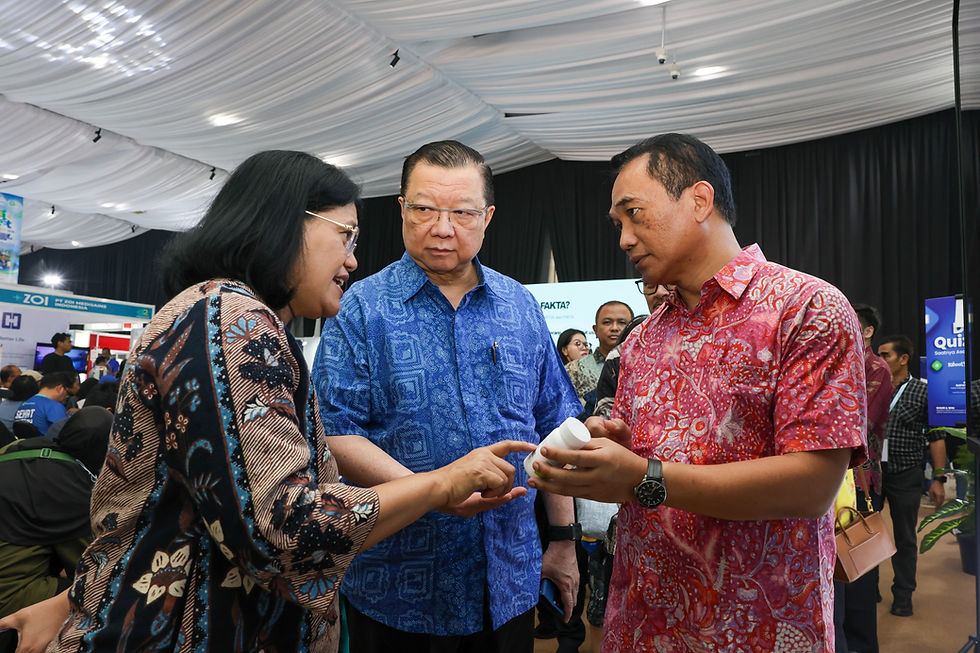
Industry Collaboration for the Health of Future Generations
Dexa Group’s Product Portfolio Management Director, Helen Corana, stated that MMS forms part of Dexa Group’s strategy to develop a portfolio of healthcare products that are relevant for the broader public health needs, particularly the specific health needs of pregnant women, while offering market growth potential.
“When developing our product portfolio, we consistently consider public health needs, particularly those of pregnant women, government priorities, and market development opportunities. MMS is one of our strategic products with high and sustained demand both in Indonesia and globally. Through collaboration with the government and strategic partners, we see opportunities to deliver high-quality products that not only support national health programs but also expand the contribution of Indonesia’s pharmaceutical industry to international markets,” said Helen Corana.
Through the production of UNIMMAP-formulated MMS, Beta Pharmacon is helping to strengthen Indonesia’s domestic pharmaceutical manufacturing capacity to produce healthcare products that meet international quality standards. This initiative not only supports government programs and addresses the needs of pregnant women in Indonesia, but also creates opportunities for the national pharmaceutical industry to contribute to meeting global market demand.
In line with the theme of the 62nd National Health Day, “Healthy for All,” this collaboration represents part of the broader effort to improve maternal health and prepare a healthier generation of Indonesians from the very beginning of life.