

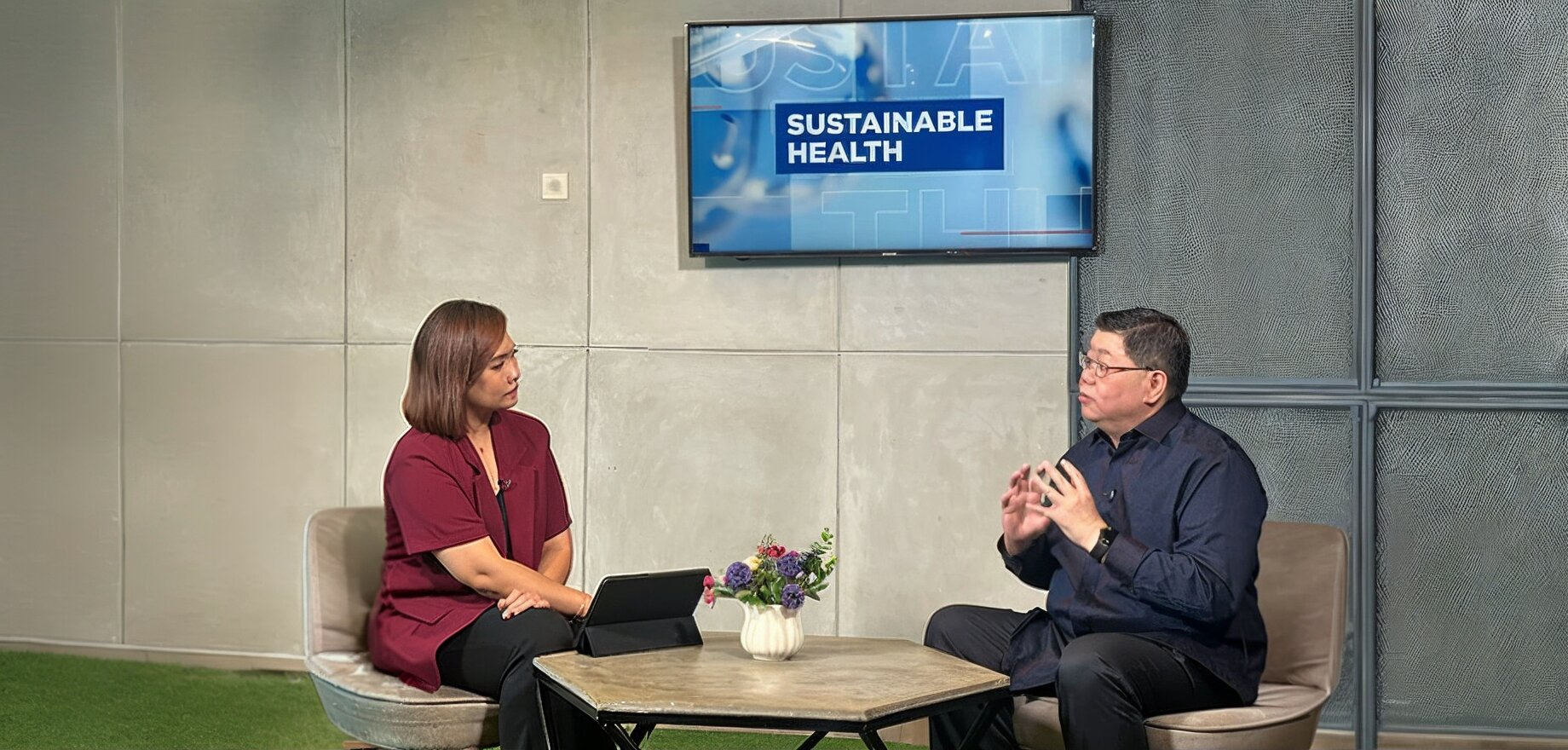
Prof. Raymond Tjandrawinata’s interview with CNBC Indonesia aired on 12 May 2026.
The global herbal medicine market is projected to reach USD 600 billion by 2030. With the world’s second-largest biodiversity, Indonesia is stepping forward through science, research, and innovation.
JAKARTA — The world has long recognized Traditional Chinese Medicine (TCM) from China and Ayurveda from India as major forces in the global herbal medicine industry. Indonesia is now preparing to establish its place on the same global map, backed by equally strong potential: the world’s second-largest biodiversity after Brazil, home to more than 30,000 medicinal plant species, supported by internationally standardized scientific research.
The global herbal medicine market continues to grow rapidly and is projected to reach USD 600 billion by 2030. Indonesia is positioning itself not merely as a supplier of raw materials, but as a producer of globally standardized modern natural medicines.
Prof. Raymond R. Tjandrawinata, Business Development and Scientific Affairs Director of PT Dexa Medica and Honorary Professor of Pharmaceutical Biotechnology at Atma Jaya Catholic University of Indonesia, emphasized that the success of China and India lies not only in their natural resources, but also in their commitment to building healthcare ecosystems that fully integrate herbal medicine into modern medical services.
“Indonesia possesses the world’s second-largest biodiversity. The next step is to build a healthcare system that integrates biodiversity-based medicines into formal healthcare services, just as China and India have successfully demonstrated,” said Prof. Raymond in Jakarta on Monday, May 18, 2026.
China has established TCM as an integral part of its national hospital system, enabling it to gain global recognition as a herbal drug platform. India has developed nationwide Ayurveda hospitals supported by strong research ecosystems and clinical trials. Both countries demonstrate that natural wealth, when supported by science and integrated systems, can build world-class healthcare industries.
Indonesia possesses all of these foundations. Dexa Group is committed to turning this potential into reality.
For more than two decades, Dexa Group, through Dexa Laboratories of Biomolecular Sciences (DLBS), has consistently developed Integrative Modern Natural Medicines (OMAI) based on modern science and evidence-based medicine. This process includes extensive research, natural ingredient standardization, and rigorous clinical trials to ensure the efficacy and safety of every product developed.
“We have already exported Indonesian phytopharmaceutical products to countries such as the Philippines and Cambodia. Healthcare professionals there use and recommend Indonesian products because their international standards, efficacy, and safety have been proven,” Prof. Raymond explained.
Similar to how TCM and Ayurveda have evolved beyond promotive and preventive therapies, Dexa Group’s OMAI portfolio now includes science-based curative therapies, ranging from natural immunomodulators to strengthen the immune system, herbal therapies for women with polycystic ovarian syndrome (PCOS), to biodiversity-based supportive therapies for stroke recovery.
Dexa Group believes that the development of OMAI is inseparable from strengthening national healthcare independence while also contributing to the global pharmaceutical industry.
“China is known for TCM. India is known for Ayurveda. Our hope is that the world will recognize Indonesia for its ability to transform biodiversity into globally accepted modern medicine,” Prof. Raymond concluded.
Watch full interview on https://www.youtube.com/watch?v=RnRq1zKFlM0