

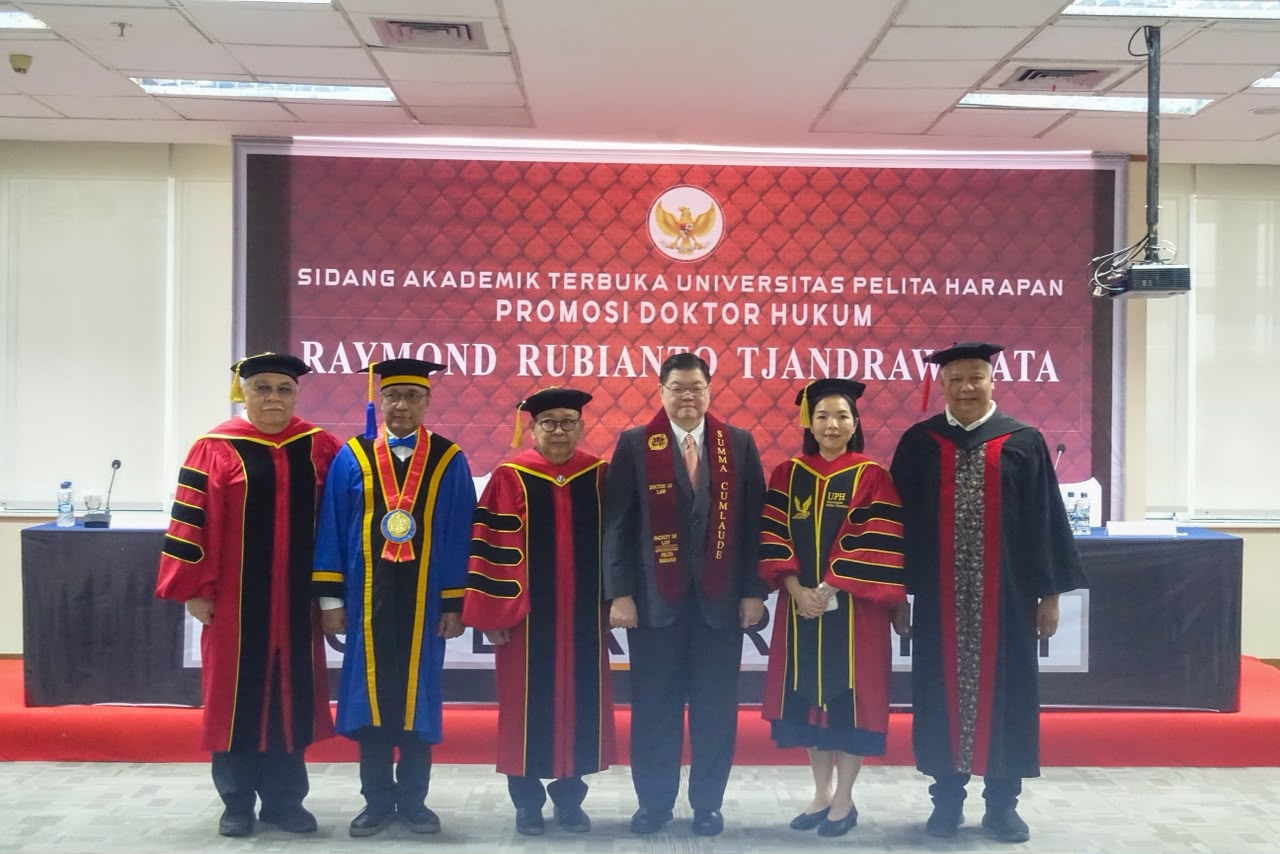
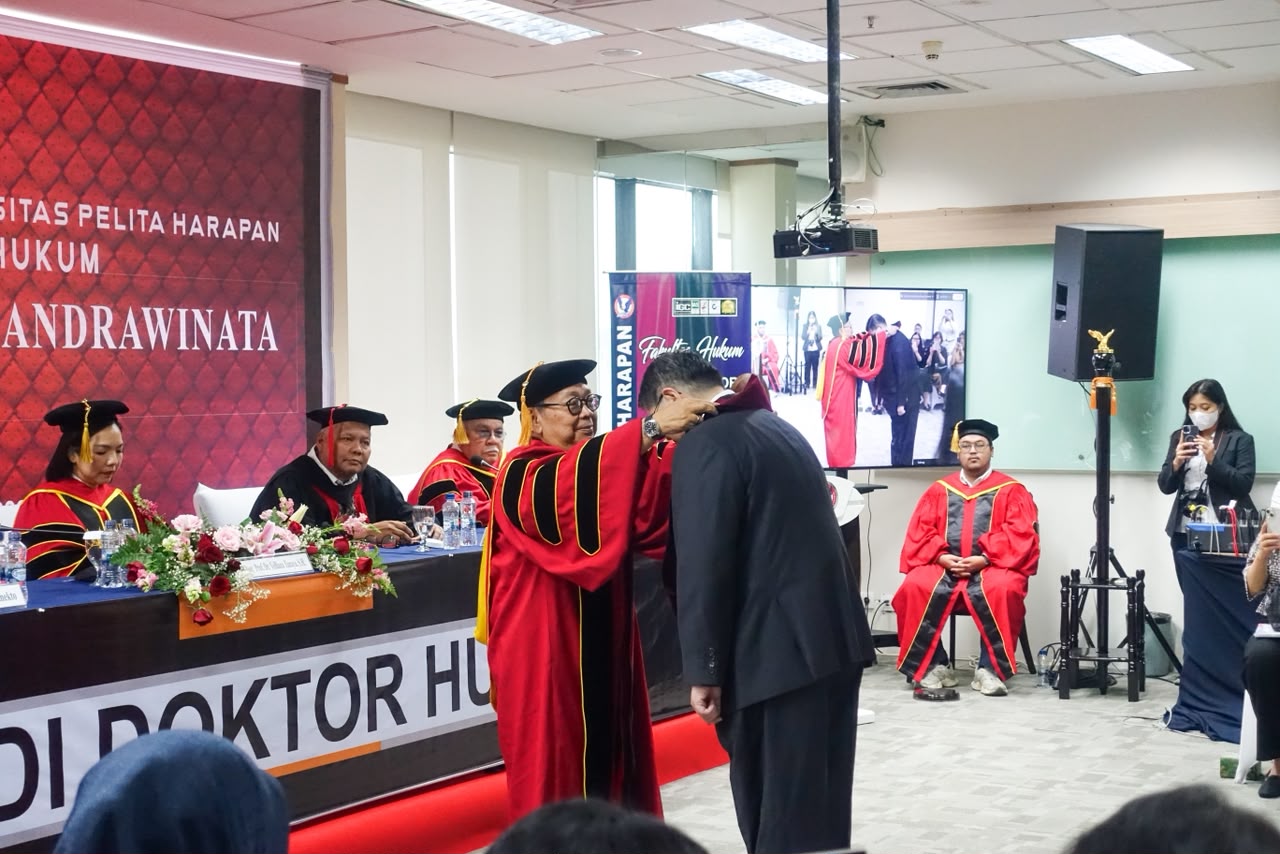
JAKARTA – Prof. Raymond Tjandrawinata, Professor of Molecular Pharmacology at Atma Jaya University and Molecular Pharmacologist at Dexa Group, has successfully completed his Doctor of Law degree at Universitas Pelita Harapan (UPH), graduating with the distinction of Summa Cum Laude
His doctoral research brings together his expertise in pharmaceutical science and law, addressing the need for a healthcare and patent framework that balances the protection of pharmaceutical innovation with equitable and timely access to medicines for the public.
Through his dissertation, Prof. Raymond emphasizes that patent protection should continue to provide incentives for innovation while ensuring that innovative medicines can ultimately reach patients when they are needed. Although a medicine may have received patent protection and regulatory approval, patients may still face barriers related to affordability, financing, procurement, and availability.
“Access to medicine is not simply about whether a medicine is available in the market. It is also about whether patients can obtain the right treatment at the right time,” said Prof. Raymond.
Advancing an Equitable Pharmaceutical Patent Model
As part of his research, Prof. Raymond proposed an Equitable Pharmaceutical Patent Model incorporating a Health Impact Analysis (HIA) framework. The approach considers both quantitative and qualitative health impacts as part of the broader assessment of pharmaceutical patents.
“Health Impact Analysis means that we do not only measure quantitative impact, but also qualitative impact. We incorporate this assessment into the patent framework to determine whether the innovation delivers meaningful impact,” Prof. Raymond explained.
To support implementation, he further proposed a Patent Integration Model that integrates the respective roles and policies of key institutions, including the Directorate General of Intellectual Property (DJKI) under the Ministry of Law, the Food and Drug Authority (BPOM), the Ministry of Health, and BPJS Kesehatan.
The proposed model does not seek to replace the mandates of these institutions. Instead, it aims to strengthen coordination and integrate relevant policies related to patented pharmaceutical products.
“Under this Patent Integration Model, we do not separate the respective mandates of DJKI, BPOM, the Ministry of Health, or BPJS Kesehatan. Instead, we integrate the policies governing patented products,” Prof. Raymond said.
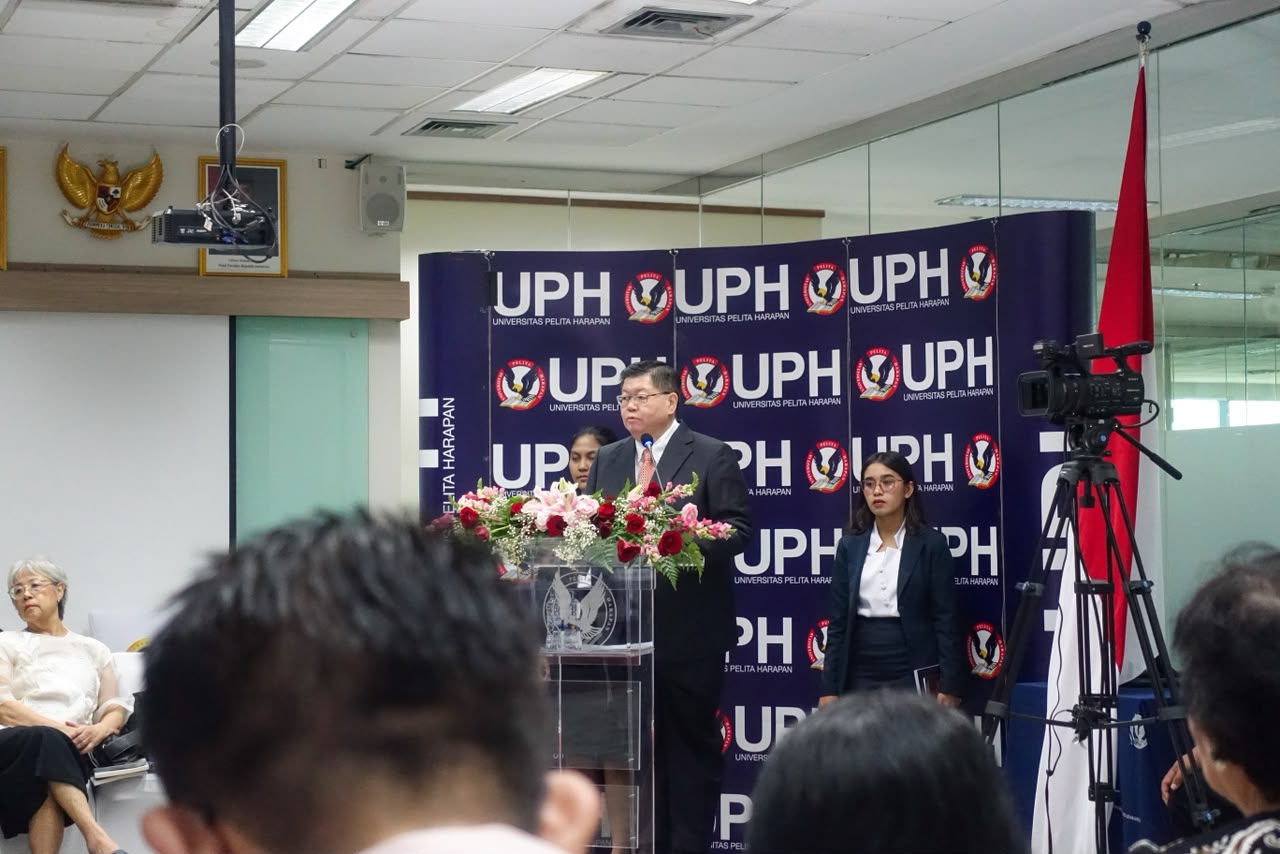
Under the proposed framework, the Ministry of Health would serve as the central policy integrator, connecting the patent assessment process with regulatory, healthcare, and financing considerations.
The integration would enable relevant assessments—from patent registration and regulatory approval to medical efficacy and healthcare considerations—to be better coordinated. The resulting insights could support more effective policymaking related to medicine volume, pricing, procurement, and distribution through the National Health Insurance (JKN) system.
“The Patent Integration Model can coordinate these processes, with the Ministry of Health serving as the policy integrator. The outcomes of the patent assessment can then inform healthcare policy in Indonesia,” Prof. Raymond added.
Bridging Science, Innovation, and Public Health
The proposed model encourages pharmaceutical innovation to remain responsive to the healthcare needs of the Indonesian population, while maintaining appropriate protection for intellectual property and innovation.
Prof. Raymond’s research is also informed by the Progressive Law theory developed by the late Prof. Satjipto Rahardjo, which places human welfare at the center of legal development. Within this perspective, the patent system should continue to evolve in a way that supports substantive justice while remaining aligned with the values of Pancasila and the Indonesian Constitution.
The proposed approach also recognizes the importance of maintaining alignment with the international patent system while allowing Indonesia to address its national public health priorities.
Prof. Raymond’s achievement reflects his longstanding commitment to advancing pharmaceutical science and healthcare innovation through an interdisciplinary approach. His doctoral research demonstrates how scientific expertise and legal perspectives can come together to contribute to a healthcare ecosystem that supports innovation while promoting broader access to medicines.
The doctoral examination was conducted by a distinguished panel comprising Assoc. Prof. Henry Soelistyo, Prof. Dr. FX Adji Samekto, Prof. Dr. Rahmi Jened, S.H., M.H., Prof. Tommy Suryo Utomo, Assoc. Prof. Dr. Velliana Tanaya, S.H., M.H., Hayyan Ul Haq, S.H., LL.M., Ph.D., and Dr. dr. Oloan E. Tampubolon. The examination was moderated by UPH Rector Dr. (Hon.) Jonathan L. Parapak, M.Eng.Sc.