

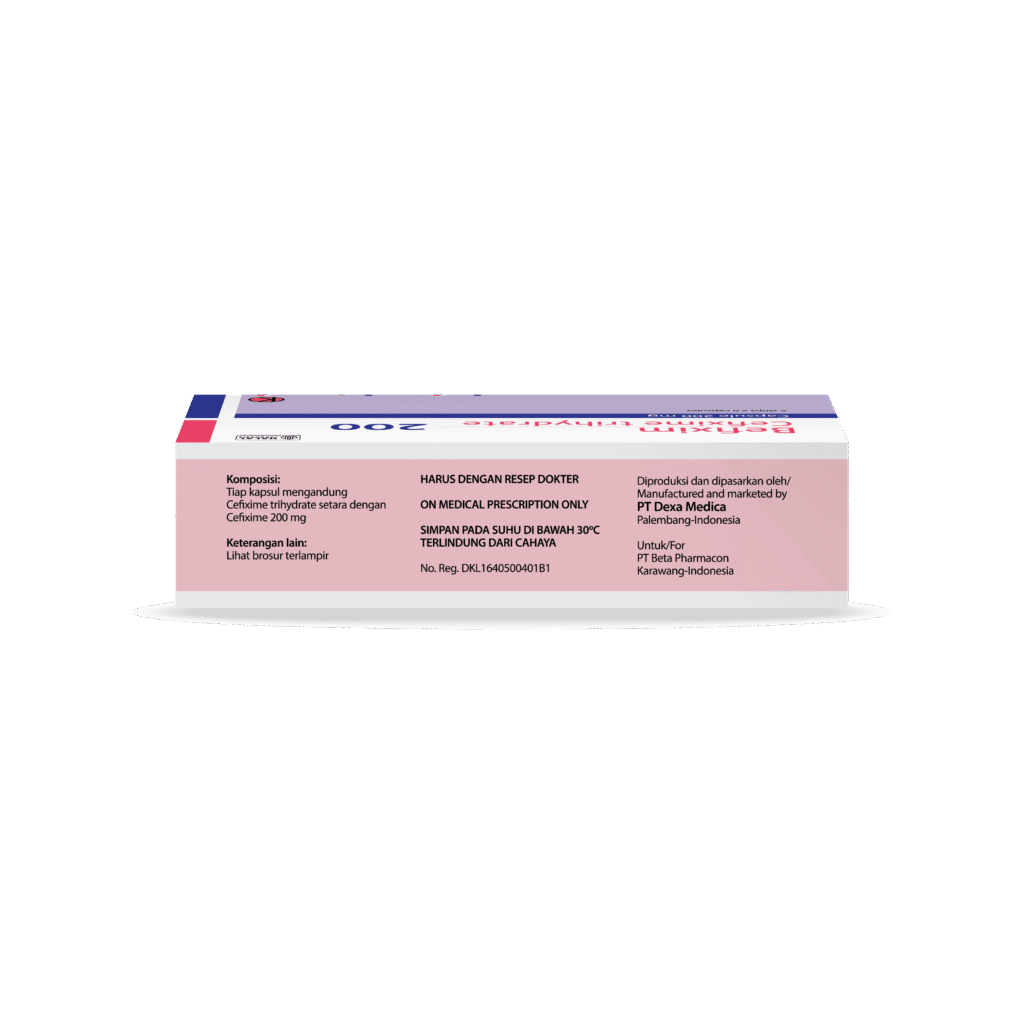
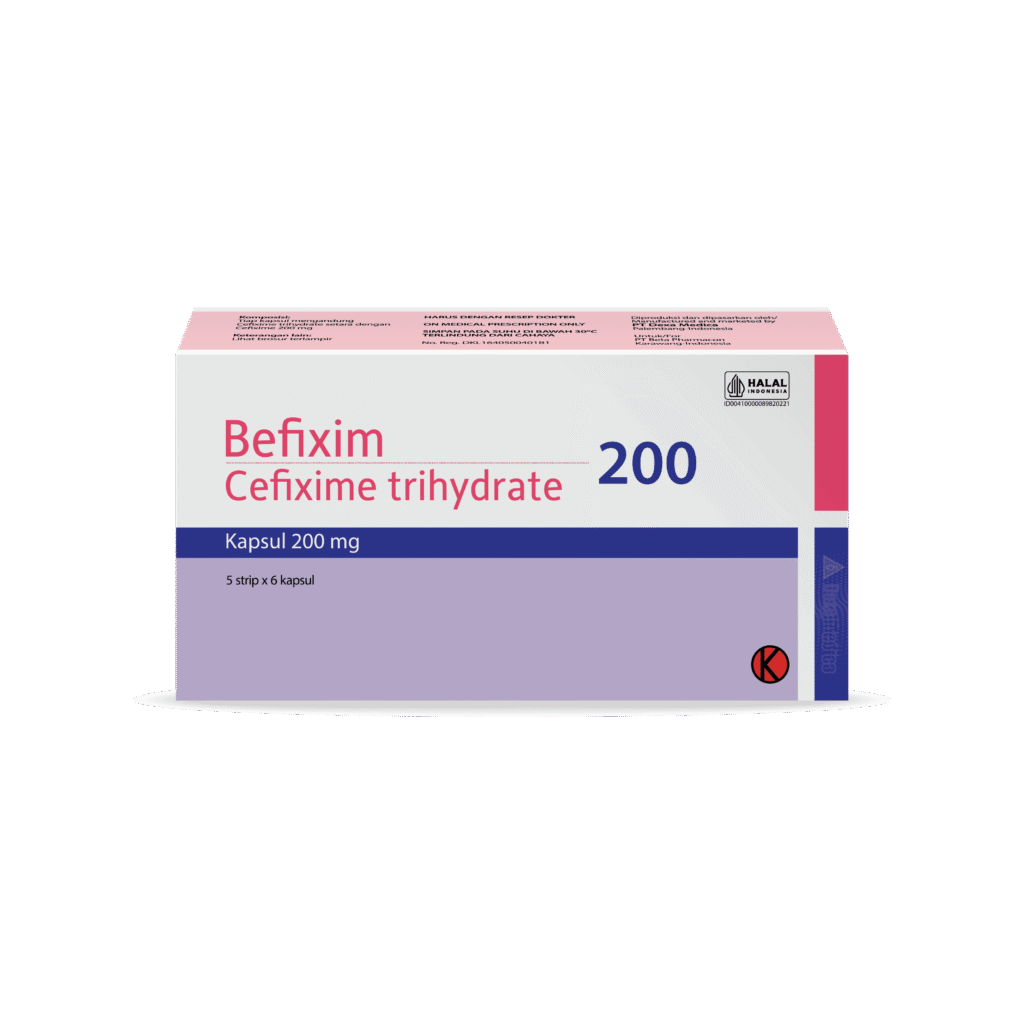
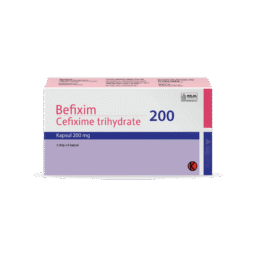
Befixim 200 mg
 Indonesia • Dexa Medica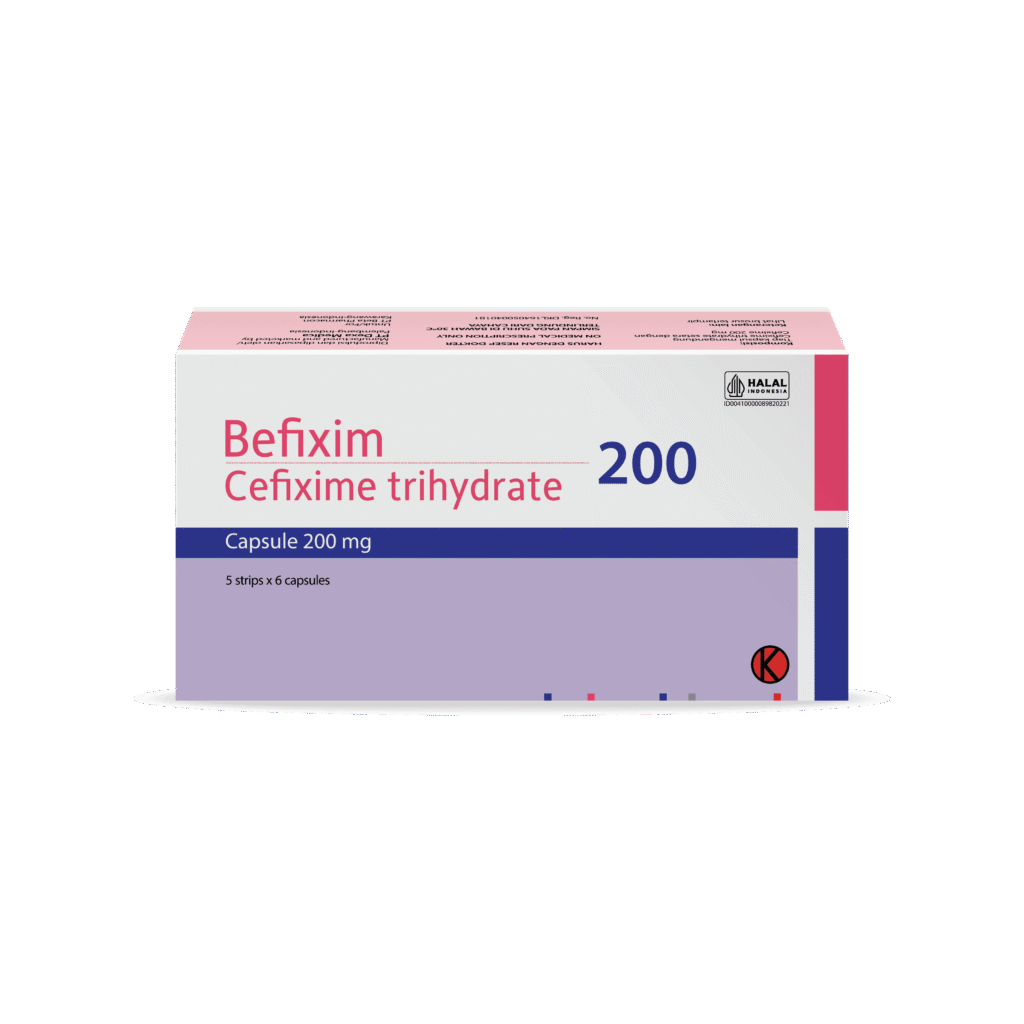
Indication
BEFIXIM is indicated for the treatment of infections caused by susceptible strain of microorganisms, i.e.:
- Uncomplicated urinary tract infections caused by Escherichia coli and Proteus mirabilis.
- Otitis media caused by Haemophillus influenzae (β-lactamase positive and negative strains), Moraxella (Branhamella) catarrhalis (most of which are β-lactamase positive) and Streptococcus pyogenes.
- Pharyngitis and tonsillitis caused by Streptococcus pyogenes.
- Acute bronchitis and acute exacerbations of chronic bronchitis caused by Streptococcus pneumoniae and Haemophillus influenzae (β-lactamase positive and negative strains).
- Uncomplicated gonorrhea (cervical/urethral), caused by Neisseria gonorrhoeae (penicillinase and nonpenicillinase-producing strains).
- Treatment of typhoid fever in children, with multidrug-resistant to the standard drug regimens.
Composition
Each capsule contains:
Cefixime trihydrate equivalent to cefixime 200 mg.
Package
Box, 5 strips x 6 capsules.
Dosage Forms
 Capsule
ATC Classification
J01D
Warning

Pregnancy
Consult Your Doctor
Safety of this item for use during pregnancy has not been established. Please consult your doctor.
Precaution
Careful inquiry about any form of hypersensitivity reactions should be made since shock may occur. Cefixime should be administered with care in the following patients:
- Patients with a history of hypersensitivity to penicillins.
- Patients with a personal or familial predisposition to allergic reactions such as bronchial asthma, rash, or urticaria.
- Patients with severe renal disorder.
- Patients with poor oral food intake, patients receiving parenteral nutrition or patients in a debilitated state. Careful observation is essential in these patients as vitamin K deficiency symptoms may develop.
Dosage
- For adults and children weighing ≥30 kg, the usual daily dose is 50–100 mg (potency) of cefixime given orally twice daily. The dosage may be adjusted depending on the patient’s age, body weight, and symptoms. For more severe or intractable infections, the dosage may be increased up to 200 mg (potency) given orally twice daily.
- For uncomplicated gonorrhea (cervical/urethral), caused by Neisseria gonorrhoeae (penicillinase- and nonpenicillinase-producing strains), a single oral dose of 400 mg is recommended.
- Typhoid fever in children: 10–15 mg/kg/day for 2 weeks.
* For detailed product information, see package insert.