

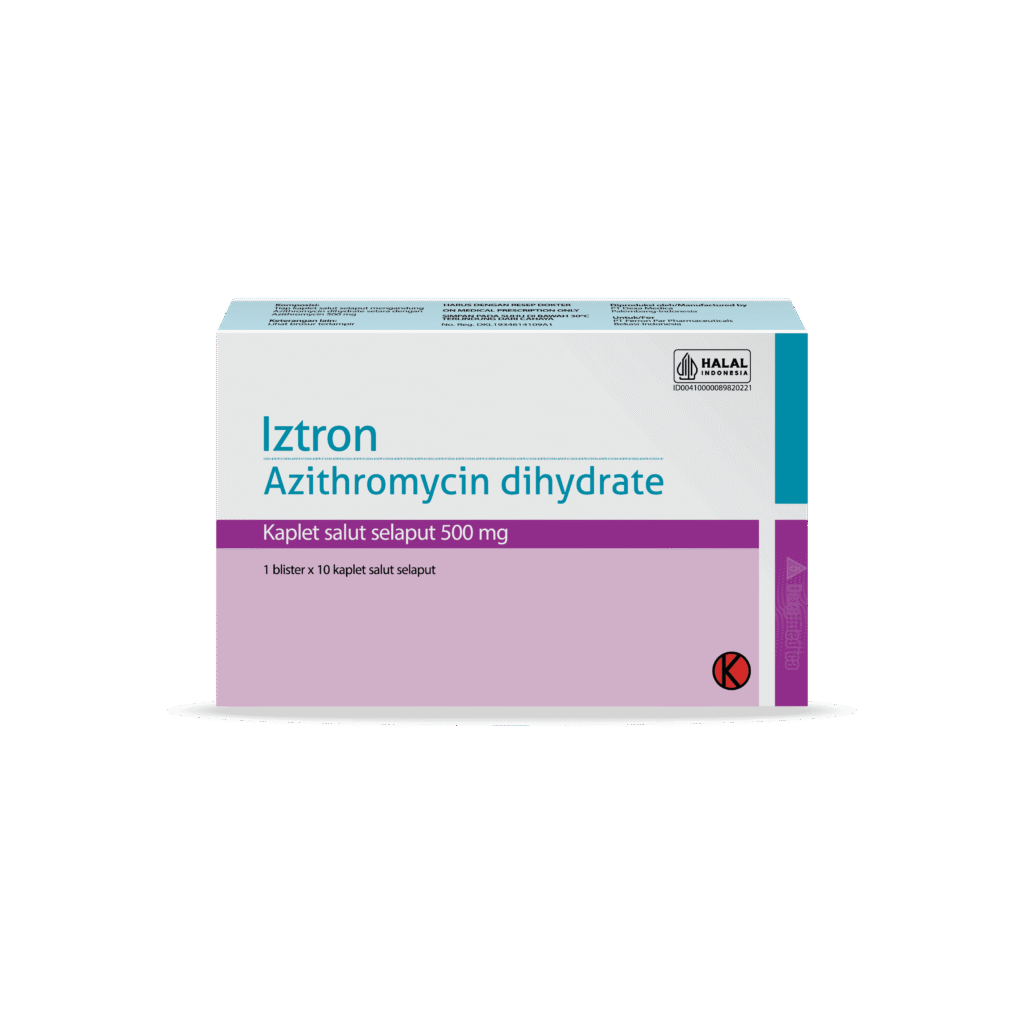
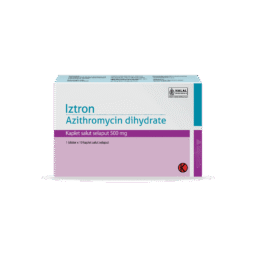
Iztron 500 mg
 Indonesia • Dexa Medica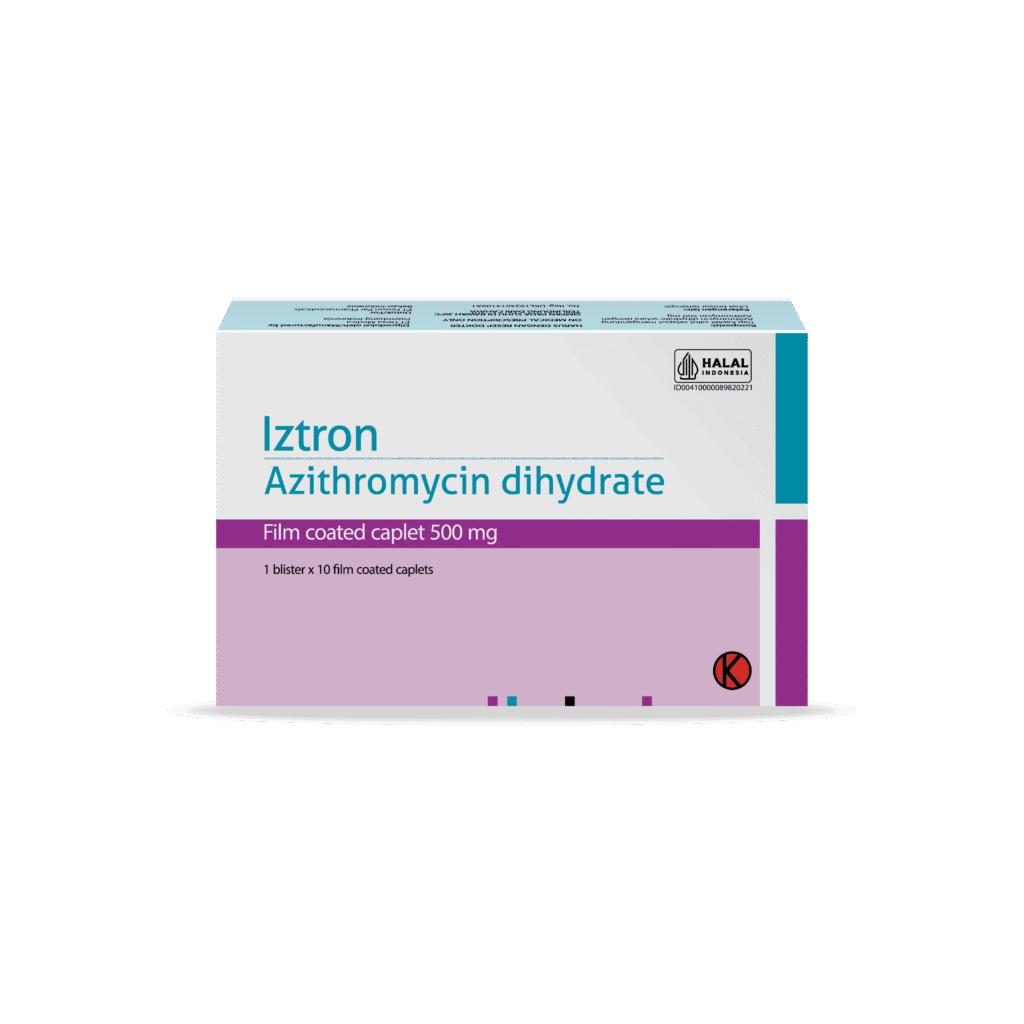

Indication
Azithromycin is indicated for the treatment of mild and moderate infection, caused by susceptible strain of the designed microorganisms in the specific conditions listed below:
Lower respiratory tract infection
Acute bacterial exacerbations of chronic obstructive pulmonary disease due to Haemophilus influenzae, Moraxella catarrhalis, or Streptococcus pneumonia. Mild to severe community-acquired pneumonia caused by Streptococcus pneumonia or Haemophilus influenza, in outpatients appropriate for oral therapy.
Upper respiratory tract infection
As an alternative to first-line therapy of acute pharyngitis/tonsillitis caused by Streptococcus pyogenes occurring in individuals who cannot use first-line therapy.
Skin and skin structure infections
Uncomplicated skin and skin structure infections due to Staphylococcus aureus, Streptococcus pyogenes, or Streptococcus agalactiae. Abscesses usually require surgical drainage.
Sexually-transmitted disease
Non-gonococcal urethritis and cervicitis due to Chlamydia trachomatis. Azithromycin, at the recommended dose, should not be relied upon to treat gonorrhea or syphilis.
Antimicrobial agents used in high doses for short periods of time to treat non-gonococcal urethritis may mask or delay the symptoms of incubating gonorrhea or syphilis. All patients with sexually-transmitted urethritis or cervicitis should have a serologic test for syphilis and appropriate cultures for gonorrhea performed at the time of diagnosis. Appropriate antimicrobial therapy and follow-up tests for these diseases should be initiated if infection is confirmed.
Appropriate culture and susceptibility tests should be performed before treatment to determine the causative organism and its susceptibility to azithromycin. Therapy with azithromycin may be initiated before results of these tests are known; once the results become available, antimicrobial therapy should be adjusted accordingly.
Composition
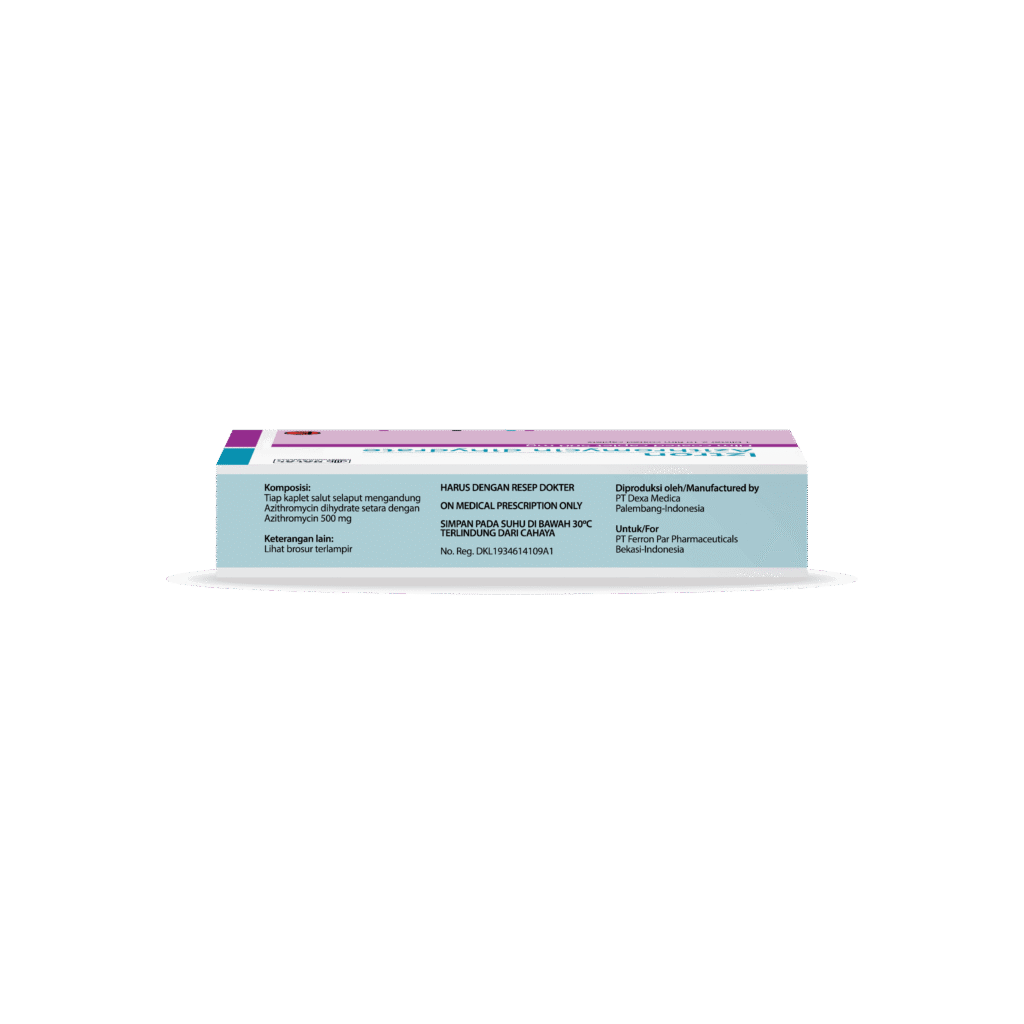
Each film-coated caplet contains:
Azithromycin dihydrate equivalent to azithromycin 500 mg.
Package
Dosage Forms
 Caplet
ATC Classification
Warning


Hypersensitivity
As with azithromycin and other macrolides, rare serious allergic reactions, including angioedema and anaphylaxis (rarely fatal), have been reported. Some of these reactions with azithromycin have resulted in recurrent symptoms and required longer period of observation and treatment.
Hepatotoxicity
Since liver is the principal route of elimination for azithromycin, the use of azithromycin should be undertaken with caution in patients with significant hepatic disease.
In patients with mild (class A) to moderate (class B) hepatic impairment, there is no evidence of a marked change in serum pharmacokinetics of azithromycin. In these patients, urinary recovery of azithromycin appears to increase, perhaps to compensate for reduced hepatic clearance. Hence no dose adjustment is recommended for patients with mild to moderate hepatic impairment.
Ergot derivatives
In patients receiving ergot derivatives, ergotism has been precipitated by coadministration of some macrolide antibiotics. There are no data concerning the possibility of an interaction between ergot and azithromycin. However, because of the theoretical possibility of ergotism, azithromycin and ergot derivatives should not be coadministered.
As with any antibiotic preparation, observation for signs of superinfection with nonsusceptible organisms, including fungi is recommended.
Clostridium difficile-associated diarrhea
Clostridium difficile associated diarrhea (CDAD) has been reported with the use of nearly all antibacterial agents, including azithromycin, and may range in severity from mild diarrhea to fatal colitis. Treatment with antibacterial agents alters the normal flora of the colon leading to overgrowth of C. difficile.
C. difficile produces toxins A and B which contribute to the development of CDAD. Hypertoxin producing strains of C. difficile cause increased morbidity and mortality, as these infections can be refractory to antimicrobial therapy and may require colectomy. CDAD must be considered in all patients who present with diarrhea following antibiotic use. Careful medical history is necessary since CDAD has been reported to occur over two months after the administration of antibacterial agents.
If CDAD is suspected or confirmed, ongoing antibiotic use not directed against C. difficile may need to be discontinued. Appropriate fluid and electrolyte management, protein supplementation, antibiotic treatment of C. difficile, and surgical evaluation should be instituted as clinically indicated.
Penicillin is the usual drug of choice in the treatment of Streptococcus pyogenes infections and the prophylaxis of rheumatic fever. Azithromycin is often effective in the eradication of susceptible strains of Streptococcus pyogenes from the nasopharynx. Because some strains are resistant to azithromycin, susceptibility test should be performed when patients are treated with azithromycin. If an allergic reaction occurs, azithromycin should be discontinued and appropriate therapy should be instituted. The physician should be aware that reappearance of the allergic symptoms may occur when symptomatic therapy is discontinued.
Azithromycin should not be used in patients with pneumonia who are judged to be inappropriate for outpatient oral therapy because of moderate to severe illness or risk factors e.g. any of the following:
- patients with nosocomially acquired infections,
- patients with known or suspected bacteremia,
- patients requiring hospitalization,
- elderly or debilitated patients, or
- patients with significant underlying health problems that may compromise their ability to respond to their illness (including immunodeficiency or functional asplenia).
Renal impairment
In patients with severe renal impairment (GFR <10 ml/min), a 33% increase in the systemic exposure to azithromycin was observed. No dose adjustment is needed in patients with mild renal impairment (creatinine clearance >40 ml/minute) but there are no data regarding azithromycin usage in patients with more severe renal impairment; thus, caution should be exercised before prescribing azithromycin in these patients.
Prolongation of the QT interval
Prolonged cardiac repolarization and QT interval, imparting a risk of developing cardiac arrhythmia and torsades de pointes, have been seen in treatment with macrolides, including azithromycin. Therefore, caution is required when treating:
- Patients with congenital or documented QT prolongation.
- Patients currently receiving treatment with other active substances known to prolong QT interval e.g. antiarrhythmics of classes IA and III; antipsychotic agents; antidepressants; and fluoroquinolones.
- Patients with electrolyte disturbance, particularly in cases of hypokalemia and hypomagnesemia.
- Patients with clinically relevant bradycardia, cardiac arrhythmia, or cardiac insufficiency.
- Elderly patients: elderly patients may be more susceptible to drug-associated effects on the QT interval.
Dosage
Azithromycin should be administered as a single daily dose. The period of dosing with regard to infection is given below. Azithromycin film-coated caplet can be taken with or without food.
Adults
For the treatment of sexually transmitted diseases caused by Chlamydia trachomatis, Haemophilus ducreyi, or susceptible Neisseria gonorrhoeae the dose is 1,000 mg as a single oral dose.
For all indications in which the oral formulation is administered, the total dosage of 1,500 mg should be given as 500 mg daily for 3 days. As an alternative, the same total dose can be given over 5 days with 500 mg given on day 1, then 250 mg daily on days 2–5.
Elderly
The same dosage as in adult patients is used in the elderly.
Renal impairment patients
No dose adjustment is necessary in patients with mild to moderate renal impairment (GFR 10–80 ml/min). Caution should be exercised when azithromycin is administered to patients with severe renal impairment (GFR ˂10 ml/minute) (see Warnings and precautions).
Hepatic impairment patients
The same dosage as in patient with normal hepatic function may be used in patients with mild to moderate hepatic impairment.